When Imai and colleagues reported in 2019 that nicotinamide mononucleotide (NMN) is absorbed intact into cells via a dedicated transporter called Slc12a8, the finding rewrote a decade of assumptions about how NAD+ precursors enter tissues. Within months, a rival laboratory published a direct contradiction. The unresolved transporter question — combined with the fact that oral, sublingual, and intranasal NMN produce radically different tissue distributions — explains why clinical NMN outcomes have been so heterogeneous. Delivery route, not just dose, dictates whether NAD+ rises in the brain, the skeletal muscle, or merely the liver.
What Is NMN?
Nicotinamide mononucleotide (NMN) is a naturally occurring nucleotide and a direct biosynthetic precursor to nicotinamide adenine dinucleotide (NAD+). NAD+ is an obligate cofactor for hundreds of enzymatic reactions, including those catalyzed by the sirtuins (SIRT1–SIRT7), PARPs, and CD38 — proteins central to mitochondrial function, DNA repair, and circadian regulation. Tissue NAD+ levels decline with age across mammalian species, and restoring NAD+ via precursor supplementation has been proposed as a strategy to mitigate age-associated metabolic dysfunction.[1]
NMN sits one enzymatic step upstream of NAD+: the enzyme nicotinamide mononucleotide adenylyltransferase (NMNAT) converts NMN directly into NAD+. Because of this proximity, NMN is often presumed to be the most efficient oral precursor — but proximity in the biochemical pathway does not guarantee bioavailability at the tissue of interest.
How NMN Reaches Tissues
The Slc12a8 Hypothesis: In 2019, Grozio and Imai reported in Nature Metabolism that the small intestine expresses a specific NMN transporter, Slc12a8, which imports NMN intact and sodium-dependently. They demonstrated that Slc12a8 knockdown reduced NMN uptake and that the transporter was upregulated in aged mice as NAD+ declined.[2] If correct, this would mean NMN does not need to be dephosphorylated to nicotinamide riboside (NR) before crossing membranes — a critical distinction for tissue-specific delivery.
The Counter-Evidence: Shortly afterward, the Brenner laboratory published data in Nature Metabolism arguing that orally administered NMN is rapidly dephosphorylated to NR by the ectoenzyme CD73 before being absorbed, and that Slc12a8 functions primarily as a chloride/potassium cotransporter rather than as an NMN transporter.[3] This view holds that NMN and NR ultimately converge on the same systemic pool because extracellular NMN cannot cross the plasma membrane directly without first being converted to NR.
What This Means Pharmacokinetically: Whether Slc12a8 is or is not a major NMN route, what is agreed upon is that orally administered NMN raises plasma NAD+ metabolites, that hepatic first-pass metabolism is substantial, and that the liver receives the largest share of any oral dose. Tissues with limited transporter expression or that sit behind diffusion barriers — most notably the brain — receive far less.
Route-Dependent Pharmacokinetics
Oral NMN: Oral NMN is absorbed rapidly in rodents, with plasma NMN and NAD+ metabolites rising within 15 minutes.[4] In a human pharmacokinetic study published in 2022, single oral doses of up to 900 mg produced dose-dependent increases in plasma NAD+ metabolites and were well tolerated.[5] However, oral delivery directs the bulk of the dose to splanchnic circulation and the liver, with limited evidence of meaningful brain NAD+ elevation in humans.
Sublingual NMN: Sublingual administration bypasses first-pass hepatic metabolism by delivering NMN through the oral mucosal venous drainage into systemic circulation directly. In theory, this should increase the fraction of dose available to peripheral tissues including skeletal muscle. While direct comparative human pharmacokinetic data between oral and sublingual NMN remain limited, the mucosal route is biologically plausible based on what is known about other small-molecule transmucosal absorption.
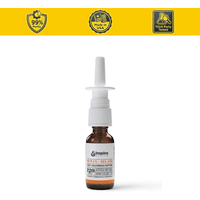
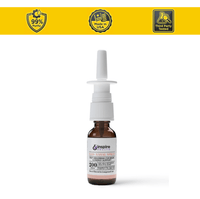
Intranasal NMN: Intranasal delivery is of particular interest for central nervous system targeting because portions of the nasal cavity drain directly into the olfactory bulb and cribriform region, bypassing the blood-brain barrier. In rodent models of cerebral ischemia, intranasal NMN administration raised brain NAD+ and reduced infarct volume more efficiently than systemic administration.[1] For neurological indications, the intranasal route may be the only realistic way to achieve meaningful brain NAD+ restoration with reasonable NMN doses.
Tissue Distribution and Compartment Effects
Liver: The liver is the primary site of NAD+ biosynthesis and the dominant recipient of orally administered NMN. It expresses high levels of NMNAT isoforms and converts NMN to NAD+ efficiently. Most preclinical metabolic benefits of NMN — improved insulin sensitivity, reduced hepatic steatosis — likely derive from this hepatic NAD+ restoration.[4]
Skeletal Muscle: Muscle NAD+ declines with age and correlates with mitochondrial dysfunction. A randomized controlled trial in postmenopausal women with prediabetes found that 250 mg/day of oral NMN for 10 weeks improved muscle insulin sensitivity and increased muscle NAD+ metabolites.[6] This suggests that oral NMN can reach muscle in sufficient quantity to produce functional effects, at least in metabolically dysregulated populations.
Brain: The blood-brain barrier substantially restricts NMN and NAD+ flux. Animal studies show that systemic NMN can modestly elevate brain NAD+, but the magnitude is much smaller than in liver or muscle.[1] This is the rationale for exploring intranasal delivery in neurodegenerative and cerebrovascular contexts.
Clinical Evidence
Metabolic Outcomes: The Yoshino et al. trial in Science demonstrated that 10 weeks of 250 mg/day oral NMN increased muscle insulin sensitivity in postmenopausal women with prediabetes, with concurrent increases in muscle NAD+ metabolite levels.[6] This remains the most rigorous human evidence that oral NMN produces a tissue-specific functional benefit.
Safety and Tolerability: A Japanese phase I study established that single oral doses up to 500 mg were safe and well tolerated in healthy men, with no significant changes in heart rate, blood pressure, oxygen saturation, or sleep quality.[4] The 2022 study extending to 900 mg single doses confirmed dose-dependent pharmacokinetics without adverse events.[5]
Physical Performance: Several small trials have examined NMN effects on aerobic capacity and walking performance in older adults, with modest positive findings. These outcomes are consistent with skeletal muscle being a reachable compartment via oral dosing.
Safety Profile
Across human trials to date, oral NMN at doses ranging from 250 mg to 1,250 mg daily has been well tolerated, with no consistent pattern of adverse events distinguishable from placebo.[5,6] Theoretical concerns include the role of NAD+ in supporting CD38-mediated inflammation and the possibility that restoring NAD+ in pre-malignant cells could support PARP-mediated DNA repair in ways that influence tumor biology — neither of which has been demonstrated clinically. Long-term safety data beyond approximately 12 weeks remain sparse.
The U.S. FDA position on NMN as a dietary supplement has shifted, with the agency taking the view in 2022 that NMN had been authorized for investigation as a drug and therefore could not be marketed as a dietary supplement — a regulatory rather than safety determination.
NMN vs Other NAD+ Precursors
NMN vs Nicotinamide Riboside (NR): NR is one biochemical step upstream of NMN (NR + ATP → NMN via NRK enzymes). NR has more extensive published human pharmacokinetic data and a clearer absorption pathway: it enters cells through equilibrative nucleoside transporters and is phosphorylated intracellularly. Whether NMN offers any tissue-targeting advantage over NR in humans remains contested — particularly given the Brenner laboratory’s data suggesting oral NMN is largely converted to NR before absorption.[3]
NMN vs Nicotinamide (NAM) and Niacin: Standard nicotinamide and niacin also raise NAD+ but engage different salvage pathway entry points and, in the case of niacin, produce flushing at higher doses. Niacin has the longest clinical history and the most robust long-term safety data; NMN’s advantage, if any, is the absence of flushing and potentially more favorable methylation balance.
Route Selection by Indication: For systemic metabolic indications, oral NMN appears sufficient. For targeted skeletal muscle NAD+ restoration, oral dosing has demonstrated effect in at least one rigorous trial.[6] For central nervous system indications, intranasal delivery remains the most pharmacologically rational route, though human data are essentially absent.
References
- Yoshino J, Baur JA, Imai SI. “NAD+ Intermediates: The Biology and Therapeutic Potential of NMN and NR.” Cell Metabolism. 2018;27(3):513-528.
- Grozio A, Mills KF, Yoshino J, et al. “Slc12a8 is a nicotinamide mononucleotide transporter.” Nature Metabolism. 2019;1(1):47-57.
- Schmidt MS, Brenner C. “Absence of evidence that Slc12a8 encodes a nicotinamide mononucleotide transporter.” Nature Metabolism. 2019;1(7):660-661.
- Irie J, Inagaki E, Fujita M, et al. “Effect of oral administration of nicotinamide mononucleotide on clinical parameters and nicotinamide metabolite levels in healthy Japanese men.” Endocrine Journal. 2020;67(2):153-160.
- Pencina KM, Lavu S, dos Santos M, et al. “MIB-626, an Oral Formulation of a Microcrystalline Unique Polymorph of β-Nicotinamide Mononucleotide, Increases Circulating Nicotinamide Adenine Dinucleotide and its Metabolome in Middle-Aged and Older Adults.” The Journals of Gerontology: Series A. 2023;78(1):90-96.
- Yoshino M, Yoshino J, Kayser BD, et al. “Nicotinamide mononucleotide increases muscle insulin sensitivity in prediabetic women.” Science. 2021;372(6547):1224-1229.