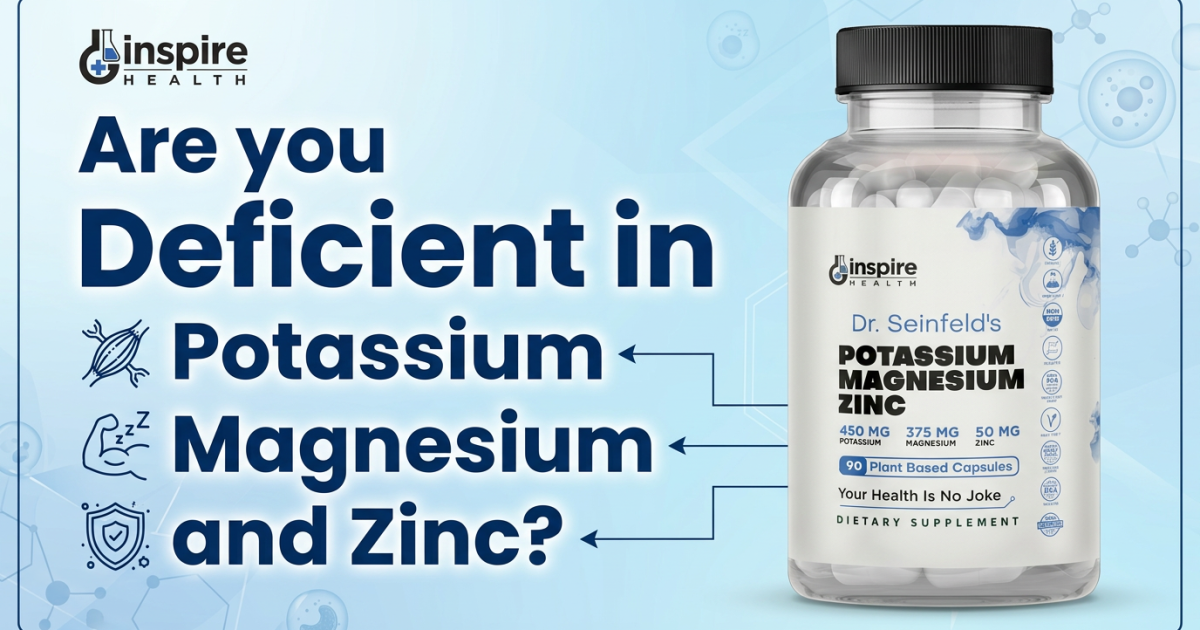
There are hundreds of supplements on the market promising miraculous benefits. But before you chase exotic compounds, there’s a fundamental question most people haven’t answered: are you getting enough of the basic minerals your body needs to function?
The answer, for most Americans, is no. Studies consistently show that the majority of the U.S. population fails to meet adequate intake levels for potassium, magnesium, and zinc — three minerals involved in over 800 enzymatic reactions in the body.[1]
The Magnesium Problem
Magnesium is involved in over 300 enzymatic processes including energy production, protein synthesis, muscle and nerve function, blood sugar regulation, and blood pressure control. Despite its critical importance, an estimated 50-75% of Americans consume less than the recommended daily amount.[2]
Why we’re deficient: Modern agricultural practices have depleted soil magnesium levels. Food processing removes significant magnesium content. Stress, alcohol, and certain medications (PPIs, diuretics) increase magnesium excretion. The recommended daily intake (400-420mg for men, 310-320mg for women) is difficult to achieve through diet alone without deliberately consuming magnesium-rich foods daily.
Signs of deficiency: Muscle cramps and twitches, difficulty sleeping, anxiety and irritability, fatigue, headaches, and irregular heartbeat are all associated with suboptimal magnesium status.[3]
What the research shows: A meta-analysis published in BMC Medicine found that higher magnesium intake was associated with significantly reduced risk of type 2 diabetes, cardiovascular disease, and all-cause mortality.[4]
The Potassium Gap
Potassium is the primary intracellular electrolyte, essential for maintaining fluid balance, nerve transmission, and muscle contraction — including cardiac muscle. The adequate intake for adults is 2,600-3,400mg per day, yet the average American consumes only about 2,500mg.[5]
Why it matters: Potassium works in concert with sodium to regulate blood pressure. The modern diet, high in sodium and low in potassium, creates an imbalance that contributes to hypertension. Research published in the Journal of the American College of Cardiology found that increasing potassium intake significantly reduced blood pressure in both hypertensive and normotensive individuals.[6]
For athletes and active individuals, potassium is critical for muscle function and recovery. Potassium depletion through sweat can contribute to cramping, weakness, and impaired performance.
The Zinc Factor
Zinc is essential for immune function, wound healing, protein synthesis, DNA synthesis, and cell division. It’s also critical for testosterone production and reproductive health. An estimated 12% of the U.S. population is at risk of zinc deficiency, with higher rates among vegetarians, older adults, and those with GI disorders.[7]
Immune function: Zinc’s role in immune health is well-established. A Cochrane review found that zinc supplementation reduced the duration of common cold symptoms by approximately 33% when taken within 24 hours of symptom onset.[8]
Hormonal health: Research has demonstrated that zinc status directly influences testosterone levels. A study in Nutrition found that zinc supplementation in marginally zinc-deficient men significantly increased serum testosterone after 6 months.[9]
Why a Combined Formula Makes Sense
These three minerals work synergistically. Magnesium is required for proper zinc absorption and utilization. Potassium and magnesium work together to maintain cellular membrane potential and muscle function. Zinc and magnesium both contribute to sleep quality and recovery. Taking them together in a single formula ensures balanced intake and leverages their complementary mechanisms.
The Bottom Line
Before spending hundreds on cutting-edge supplements, make sure your mineral foundation is solid. Potassium, magnesium, and zinc deficiencies are among the most common and most overlooked nutritional gaps in the modern diet — and correcting them often produces noticeable improvements in energy, sleep, recovery, and overall well-being.
References
- Rude RK. “Magnesium.” In: Coates PM, et al., eds. Encyclopedia of Dietary Supplements. 2nd ed. New York, NY: Informa Healthcare; 2010:527-537.
- Rosanoff A, et al. “Suboptimal magnesium status in the United States: are the health consequences underestimated?” Nutrition Reviews. 2012;70(3):153-164.
- Guerrera MP, et al. “Therapeutic uses of magnesium.” American Family Physician. 2009;80(2):157-162.
- Fang X, et al. “Dose-response relationship between dietary magnesium intake, serum magnesium concentration and risk of hypertension.” BMC Medicine. 2016;14:210.
- Weaver CM. “Potassium and health.” Advances in Nutrition. 2013;4(3):368S-377S.
- Aburto NJ, et al. “Effect of increased potassium intake on cardiovascular risk factors.” Journal of the American College of Cardiology. 2013;62(14):1297.
- Wessells KR, Brown KH. “Estimating the global prevalence of zinc deficiency.” PLoS ONE. 2012;7(11):e50568.
- Singh M, Das RR. “Zinc for the common cold.” Cochrane Database of Systematic Reviews. 2013;(6):CD001364.
- Prasad AS, et al. “Zinc status and serum testosterone levels of healthy adults.” Nutrition. 1996;12(5):344-348.