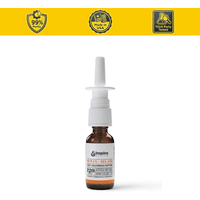
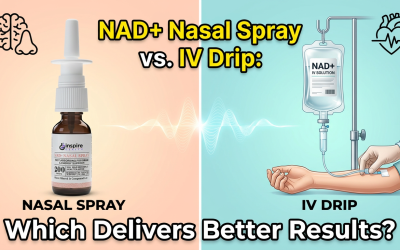
If NAD+ nasal sprays are the daily maintenance protocol, injectable NAD+ is the deep restoration. It delivers the highest bioavailability, the most direct cellular impact, and — when combined with methylcobalamin (B12) — creates a comprehensive cellular energy protocol that addresses both mitochondrial function and methylation.
But injectable peptide therapy isn’t something you order off a shelf. It requires physician review, proper protocols, and cold-chain shipping to maintain molecular integrity. Here’s what you need to know.
Why Injectable NAD+ Delivers Superior Results
Subcutaneous NAD+ injection delivers the molecule directly into tissue, where it’s rapidly absorbed into the bloodstream. Unlike oral NAD+ precursors (NMN, NR) that require enzymatic conversion steps, injectable NAD+ is bioidentical — the exact molecule your cells need, delivered in its active form.[1]
This matters because the conversion pathway from precursors to NAD+ isn’t always efficient, especially in older adults or those with compromised liver function. By bypassing the conversion bottleneck, injectable NAD+ ensures maximum cellular delivery.
The B12 Synergy
Methylcobalamin (methyl-B12) isn’t added as filler — it serves a specific biochemical purpose. B12 is a critical cofactor in the methionine synthase reaction, which is essential for the methylation cycle. Methylation is required for DNA repair, neurotransmitter production, detoxification, and gene expression regulation.[2]
NAD+ and the methylation cycle are interconnected through the MTHFR and methionine pathways. Supporting both simultaneously creates a more complete cellular optimization protocol than either alone.
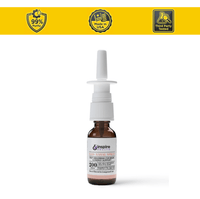
Filtraphorix™ and CryoBuffer™: Why Delivery Technology Matters
NAD+ is a fragile molecule. Temperature fluctuations, light exposure, and oxidation can degrade it rapidly. This is why proper formulation and shipping protocols are critical for injectable NAD+ products.
Filtraphorix™ technology addresses formulation stability — ensuring the NAD+ molecule remains intact and bioactive. CryoBuffer™ cold-chain shipping maintains temperature control from the manufacturing facility to your door, with injectables shipping Monday through Wednesday to avoid weekend transit delays.
What the Research Supports
While most published NAD+ research has focused on precursors (NMN and NR) or IV administration, the biological rationale for subcutaneous NAD+ is well-established. Studies have demonstrated that direct NAD+ supplementation can increase tissue NAD+ levels, activate sirtuins and PARPs, improve markers of mitochondrial function, and support DNA repair mechanisms.[3]
Research specifically on NAD+ for age-related decline has shown improvements in energy metabolism, cognitive function, and physical performance markers in both animal models and early human studies.[4]
Why Physician Oversight Is Required
Injectable peptide therapy is not a consumer product — it’s a medical protocol. Physician review ensures proper dosing based on individual health status, screening for contraindications, monitoring of response and adjustment of protocol, and integration with other medications and treatments.
This is why all injectable products require a consultation before fulfillment. If a reviewing physician determines that the protocol isn’t appropriate for your situation, you receive a full refund automatically.
Who Should Consider Injectable NAD+
Based on the published research on NAD+ decline and its consequences, injectable NAD+ therapy may be particularly relevant for adults over 40 seeking comprehensive anti-aging support, individuals with significant fatigue or cognitive decline not explained by other causes, those looking for the highest-bioavailability NAD+ protocol available, and people who haven’t responded adequately to oral NAD+ precursors.
References
- Yoshino J, et al. “NAD+ intermediates: the biology and therapeutic potential of NMN and NR.” Cell Metabolism. 2018;27(3):513-528.
- Fenech M. “Folate (vitamin B9) and vitamin B12 and their function in the maintenance of nuclear and mitochondrial genome integrity.” Mutation Research. 2012;733(1-2):21-33.
- Verdin E. “NAD+ in aging, metabolism, and neurodegeneration.” Science. 2015;350(6265):1208-1213.
- Hou Y, et al. “NAD+ supplementation normalizes key Alzheimer’s features and DNA damage responses.” Proceedings of the National Academy of Sciences. 2018;115(8):E1876-E1885.