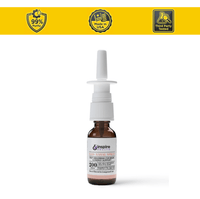
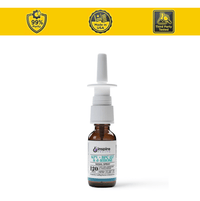
If you could design the ultimate tissue repair protocol from scratch — combining the most well-researched peptides for healing, regeneration, and cellular renewal — you’d end up with something very close to the GLOW protocol: BPC-157, TB-500 (Thymosin Beta-4), and GHK-Cu (copper peptide).
Each of these peptides has a substantial body of published research supporting its individual effects on tissue repair. But the rationale for combining them isn’t just additive — each targets a different phase and mechanism of the healing cascade, creating a comprehensive regenerative system that addresses repair from multiple angles simultaneously.
The Three Pillars of GLOW
BPC-157: The Foundation of Tissue Repair
BPC-157 (Body Protection Compound-157) is a 15-amino-acid peptide derived from human gastric juice. It has been studied in over 100 published papers demonstrating effects across virtually every tissue type — muscle, tendon, ligament, bone, gut, nerve, and vascular tissue.[1]
BPC-157’s primary mechanisms include promoting angiogenesis (new blood vessel formation) to deliver oxygen and nutrients to injury sites, upregulating growth factors including VEGF and the FAK-paxillin pathway, modulating the nitric oxide system bidirectionally — normalizing it whether pathologically high or low, protecting against NSAID-induced damage and various toxic insults, and accelerating the formation of granulation tissue and collagen deposition.[2]
Think of BPC-157 as the general contractor of tissue repair — it coordinates the overall healing process and ensures the infrastructure (blood supply) is in place.
TB-500 (Thymosin Beta-4): The Cellular Mobilizer
Thymosin Beta-4 is a 43-amino-acid peptide that is the most abundant member of the beta-thymosin family. TB-500 is the active fragment used therapeutically. It’s naturally present in all human cells (except red blood cells) and plays fundamental roles in cell migration, proliferation, and differentiation.[3]
TB-500’s mechanisms include sequestering G-actin to promote cell migration — literally helping repair cells move to the injury site, promoting angiogenesis through distinct pathways from BPC-157, reducing inflammation by downregulating pro-inflammatory cytokines, supporting stem cell maturation and differentiation, and promoting hair follicle stem cell migration (which is why it also has applications in hair restoration).[4]
If BPC-157 is the general contractor, TB-500 is the logistics coordinator — it mobilizes the cells and resources needed for repair and gets them to where they’re needed.
GHK-Cu: The Cellular Renewal Signal
GHK-Cu (glycyl-L-histidyl-L-lysine copper complex) is a naturally occurring tripeptide found in human plasma, with concentrations that decline significantly with age — from approximately 200 ng/mL at age 20 to 80 ng/mL by age 60. This age-related decline has led researchers to investigate GHK-Cu as a key signaling molecule in the body’s regenerative capacity.[5]
GHK-Cu’s mechanisms include stimulating collagen synthesis (types I, III, and V) — the primary structural proteins in connective tissue, upregulating decorin (which organizes collagen fibers for maximum strength), activating genes associated with tissue remodeling while suppressing genes associated with tissue destruction, increasing superoxide dismutase and other antioxidant enzymes, and modulating gene expression broadly — studies have shown GHK-Cu affects 31.2% of human genes, largely shifting expression toward a “younger” pattern.[6]
GHK-Cu is the quality control specialist — it ensures that repaired tissue is structurally sound, properly organized, and protected from oxidative damage.
Why the Combination Is Greater Than the Sum
Tissue repair is not a single event — it’s a cascade of overlapping processes. The GLOW protocol addresses each phase:
Phase 1 — Inflammation and Protection (BPC-157): BPC-157 modulates the initial inflammatory response and protects surrounding tissue from secondary damage.
Phase 2 — Cell Migration and Proliferation (TB-500): TB-500 mobilizes repair cells to the injury site and promotes their proliferation.
Phase 3 — Tissue Remodeling and Maturation (GHK-Cu): GHK-Cu ensures that new tissue is properly structured, with organized collagen architecture and robust antioxidant protection.
By addressing all three phases simultaneously, the GLOW protocol creates an environment where each peptide’s effects are amplified by the others. BPC-157 builds the blood supply that delivers TB-500’s mobilized repair cells, which then lay down new tissue that GHK-Cu organizes and strengthens.
Applications
The GLOW protocol’s comprehensive approach to tissue repair makes it relevant for post-surgical recovery and wound healing, musculoskeletal injuries (tendon, ligament, muscle), joint health and cartilage support, skin rejuvenation and anti-aging, gut healing and intestinal repair, and general tissue maintenance for aging adults experiencing declining regenerative capacity.
References
- Sikiric P, et al. “Stable gastric pentadecapeptide BPC 157: novel therapy in gastrointestinal tract.” Current Pharmaceutical Design. 2011;17(16):1612-1632.
- Seiwerth S, et al. “BPC 157 and standard angiogenic growth factors.” Current Pharmaceutical Design. 2018;24(18):1972-1989.
- Goldstein AL, et al. “Thymosin beta-4: actin-sequestering protein moonlights to repair injured tissues.” Trends in Molecular Medicine. 2005;11(9):421-429.
- Philp D, et al. “Thymosin beta-4 promotes angiogenesis, wound healing, and hair follicle development.” Annals of the New York Academy of Sciences. 2007;1112:95-103.
- Pickart L, et al. “GHK peptide as a natural modulator of multiple cellular pathways in skin regeneration.” BioMed Research International. 2015;2015:648108.
- Hong Y, et al. “GHK-Cu modulates gene expression of human genes.” Gene Expression Analysis. 2012.