One of the most persistent misconceptions in the longevity space is that NMN, NR, and NAD+ are interchangeable — that swallowing any of them simply "raises NAD+." The pharmacokinetic data tell a more interesting story: each precursor follows a distinct absorption and metabolic path, and the route of administration largely determines which tissues benefit. A 2026-era reading of the literature makes one thing clear — bioavailability is not a single number, it is a tissue-by-tissue map.
What Are NMN, NR, and NAD+?
Nicotinamide adenine dinucleotide (NAD+) is the central redox cofactor of cellular metabolism and a required substrate for sirtuins, PARPs, and CD38. Because intact NAD+ is a charged dinucleotide that does not readily cross most plasma membranes, the body relies on smaller precursors entering the salvage pathway. Nicotinamide riboside (NR) is a nucleoside — nicotinamide attached to ribose. Nicotinamide mononucleotide (NMN) adds a phosphate group, making it the immediate precursor to NAD+ via the enzyme NMNAT.[1]
The clinical question is not which molecule is "best" in the abstract, but which precursor — delivered by which route — actually elevates NAD+ in the tissue you care about: muscle, liver, brain, vasculature, or immune cells.
How Each Precursor Is Absorbed and Metabolized
NR Absorption: Oral NR is absorbed in the small intestine and is rapidly taken up by the liver, where it is phosphorylated by NRK1 to form NMN intracellularly, then converted to NAD+. A substantial fraction of NR is also degraded to nicotinamide (NAM) in the gut and liver before reaching peripheral tissues. Human pharmacokinetic studies show that oral NR reliably raises whole-blood NAD+ but produces a NAM-dominated metabolite signature, suggesting heavy first-pass conversion.[2]
NMN Absorption and the Slc12a8 Question: In 2019, Imai and colleagues reported that Slc12a8 functions as a direct NMN transporter in the murine small intestine, allowing intact NMN to be absorbed without prior dephosphorylation to NR.[3] This finding remains debated — other groups have argued that the bulk of orally administered NMN is dephosphorylated to NR at the brush border before uptake. The practical implication is that even if Slc12a8-mediated direct NMN transport occurs, a meaningful share of an oral NMN dose still enters cells via the NR pathway, with the same hepatic first-pass dynamics.
Direct NAD+ Administration: Intravenous NAD+ bypasses the gut entirely and delivers the intact dinucleotide into the systemic circulation. However, NAD+ does not cross most cell membranes intact; it is degraded extracellularly by CD38 and the ectoenzyme CD73, generating NMN, NR, and NAM that are then taken up by cells. IV NAD+ therefore behaves, pharmacokinetically, as a slow extracellular release of precursors rather than a direct intracellular bolus.[4]
Tissue Distribution: Why Route Matters
Liver Dominance with Oral Routes: Both oral NR and oral NMN concentrate NAD+ uplift in the liver because of portal circulation. The liver expresses high levels of NRK1 and NMNAT, and it efficiently captures circulating precursors before they reach systemic distribution. Mouse tracer studies using isotope-labeled NR and NMN have shown that the liver is the dominant site of NAD+ synthesis from oral precursors, with skeletal muscle and brain receiving substantially less labeled NAD+.[5]
Skeletal Muscle Uptake: Muscle NAD+ rises with oral precursors but more modestly than liver NAD+, and the kinetics are slower. Human trials of oral NR and NMN have shown measurable increases in muscle NAD+ over weeks of dosing, but the magnitude is typically smaller than the rise seen in blood or liver.[2]
Brain Penetration: The blood–brain barrier restricts most NAD+ precursors. NR appears to cross more readily than NMN due to its smaller, uncharged structure, and brain NAD+ elevation has been demonstrated in rodent models with chronic oral NR. Whether this translates to clinically meaningful CNS effects in humans remains an open question.[1]
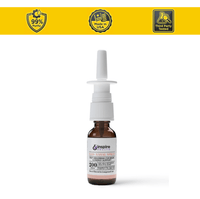
Subcutaneous and Intranasal Routes: Compounded subcutaneous NAD+ and intranasal NAD+ are increasingly used in clinical practice. Pharmacokinetic data are limited, but subcutaneous administration appears to produce a slower, more sustained release profile than IV, while intranasal delivery is hypothesized to allow some olfactory pathway access to the CNS — though robust human data are lacking.
Clinical Evidence in Humans
Oral NR Trials: The Trammell et al. pharmacokinetic study in humans was the first to demonstrate that oral NR elevates blood NAD+ in a dose-dependent manner, with a clear NAM metabolite peak indicating extensive first-pass metabolism.[2] Subsequent randomized trials have confirmed sustained NAD+ elevation with chronic dosing and have shown modest improvements in markers of vascular and metabolic health.
Oral NMN Trials: A 2021 randomized controlled trial by Yoshino and colleagues in postmenopausal women with prediabetes demonstrated that 10 weeks of oral NMN improved muscle insulin sensitivity, with measurable changes in muscle NAD+ metabolism.[6] Other trials have shown improvements in walking endurance and aerobic capacity in older adults, though effect sizes are modest and tissue-specific NAD+ measurements remain rare.
IV NAD+: Controlled human pharmacokinetic data on IV NAD+ are limited. The available evidence suggests that intact NAD+ disappears rapidly from plasma and that the metabolite profile resembles slow extracellular degradation to NMN, NR, and NAM.[4] Most clinical reports of IV NAD+ are observational or anecdotal, and randomized trials directly comparing IV NAD+ to oral precursors for tissue-level outcomes do not yet exist.
Safety Profile
Across published trials, oral NR (up to 1000–2000 mg/day) and oral NMN (up to 900–1200 mg/day) have shown excellent tolerability, with adverse event rates similar to placebo and no consistent signal of laboratory abnormalities.[2][6] The most common complaints are mild gastrointestinal symptoms and, occasionally, flushing.
IV NAD+ has a different safety consideration set. Rapid infusion is associated with chest pressure, nausea, and a sense of "internal pressure" that resolves when the infusion rate is reduced — a well-recognized clinical pattern, though not formally characterized in randomized data. Because IV NAD+ engages CD38 and PARP signaling acutely and at high systemic concentrations, slow infusion (typically over 2–4 hours) is standard practice.
A theoretical concern shared across all NAD+-boosting strategies is the relationship between NAD+ availability and cancer biology. NAD+ is required for PARP-mediated DNA repair and supports proliferation in some tumor models. Long-term outcome data in humans are not yet available, and patients with active malignancy are typically excluded from supplementation protocols.
NMN vs NR vs IV NAD+: Choosing a Route
For Hepatic and Metabolic Targets: Oral NR or oral NMN are the most pharmacokinetically appropriate choices. Both efficiently raise liver NAD+, and the bulk of human evidence for metabolic endpoints — insulin sensitivity, lipid handling, hepatic steatosis markers — comes from oral dosing.
For Skeletal Muscle: Oral NMN has the strongest direct human evidence to date for muscle NAD+ elevation and insulin sensitivity, though oral NR likely produces similar effects with longer dosing.[6] The practical difference between the two precursors at the muscle level appears smaller than marketing often implies.
For Systemic or CNS Targets: The case for IV or subcutaneous NAD+ rests largely on the argument that bypassing first-pass metabolism allows broader tissue distribution. The pharmacokinetic data are consistent with this, but high-quality randomized trials demonstrating superior outcomes versus oral precursors are not yet available.
The Honest Summary: Route of administration shapes the tissue distribution of NAD+ uplift more than the choice between NMN and NR. Oral routes favor the liver and, secondarily, muscle. Parenteral routes favor broader systemic exposure but at the cost of convenience and a less-characterized safety profile. Clinicians selecting a strategy should match the route to the target tissue and the strength of available evidence — not to the molecule with the loudest marketing.
References
- Rajman L, Chwalek K, Sinclair DA. "Therapeutic Potential of NAD-Boosting Molecules: The In Vivo Evidence." Cell Metabolism. 2018;27(3):529-547.
- Trammell SAJ, Schmidt MS, Weidemann BJ, et al. "Nicotinamide riboside is uniquely and orally bioavailable in mice and humans." Nature Communications. 2016;7:12948.
- Grozio A, Mills KF, Yoshino J, et al. "Slc12a8 is a nicotinamide mononucleotide transporter." Nature Metabolism. 2019;1(1):47-57.
- Liu L, Su X, Quinn WJ 3rd, et al. "Quantitative Analysis of NAD Synthesis-Breakdown Fluxes." Cell Metabolism. 2018;27(5):1067-1080.
- Yoshino J, Baur JA, Imai SI. "NAD+ Intermediates: The Biology and Therapeutic Potential of NMN and NR." Cell Metabolism. 2018;27(3):513-528.
- Yoshino M, Yoshino J, Kayser BD, et al. "Nicotinamide mononucleotide increases muscle insulin sensitivity in prediabetic women." Science. 2021;372(6547):1224-1229.