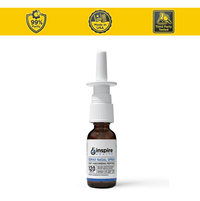
Semax occupies a unique position in neuropharmacology: it is one of the few peptide therapeutics that has been used clinically for decades — listed on Russia’s Essential Drugs registry since 2011 — yet remains largely unknown in Western practice. Developed at the Institute of Molecular Genetics of the Russian Academy of Sciences in the 1980s, Semax was engineered by removing the hormonal portion of ACTH while preserving the neurotropic fragment, then stabilizing it with a C-terminal Pro-Gly-Pro tripeptide. The result is a heptapeptide that crosses the blood-brain barrier, resists peptidase degradation, and produces measurable changes in BDNF expression within hours of intranasal administration.
What Is Semax?
Semax is a synthetic heptapeptide with the sequence Met-Glu-His-Phe-Pro-Gly-Pro, structurally derived from amino acids 4-10 of adrenocorticotropic hormone (ACTH). The native ACTH(4-10) fragment was known to possess neurotropic activity without endocrine effects, but it was rapidly degraded in vivo. Russian researchers led by Nikolai Myasoedov added the Pro-Gly-Pro extension, which extended the peptide’s half-life from minutes to hours and enabled effective intranasal delivery.[1]
Semax received Russian regulatory approval for stroke, transient ischemic attack, optic nerve atrophy, and cognitive disorders. It is administered intranasally at doses ranging from 0.1% to 1% solutions, with the higher concentrations reserved for acute ischemic events. Despite three decades of clinical use in Eastern Europe, Semax remains unapproved by the FDA and EMA — a regulatory divide that reflects the geographic concentration of its research literature rather than safety concerns.
How Semax Works
BDNF Upregulation: The most robust molecular effect of Semax is rapid induction of brain-derived neurotrophic factor (BDNF) and its precursor proBDNF in the hippocampus and basal forebrain. A landmark study by Dolotov and colleagues demonstrated that a single intraperitoneal dose of Semax increased BDNF protein levels in rat hippocampus within 1.5 hours, with effects persisting for at least 24 hours.[2] This BDNF surge appears to mediate many of the peptide’s downstream cognitive and neuroprotective effects through TrkB receptor activation.
Monoaminergic Modulation: Semax exerts pronounced effects on dopaminergic and serotonergic systems. It enhances dopamine release in the striatum and modulates serotonin metabolism in the brainstem, producing anxiolytic and antidepressant-like effects in animal models without the receptor occupancy profile of conventional psychotropics. These effects are observed at doses far below those required for sedation or motor impairment.[3]
Enkephalin Stabilization: Semax inhibits the degradation of endogenous enkephalins by blocking enkephalin-degrading enzymes in blood plasma. This indirect opioid system modulation contributes to the peptide’s analgesic and stress-buffering effects without producing tolerance or dependence characteristic of direct opioid agonists.[4]
Anti-inflammatory Gene Expression: Genome-wide transcriptional analysis has shown that Semax modulates expression of genes involved in vascular function, inflammation, and immune response in ischemic rat brain tissue. Medvedeva and colleagues identified hundreds of differentially expressed genes following Semax administration, with particular enrichment in pathways related to leukocyte adhesion, cytokine signaling, and apoptosis regulation.[5]
Clinical Evidence
Acute Ischemic Stroke: The most extensive clinical evidence for Semax involves acute ischemic stroke management. Russian multicenter trials have demonstrated that intranasal Semax at 1% concentration, administered within the first 24 hours of stroke onset, reduces neurological deficit scores and improves functional outcomes at 30 days compared with standard care alone. Gusev and colleagues reported significant improvements in NIH Stroke Scale scores, mortality reduction, and accelerated motor recovery in patients receiving Semax adjunctive therapy.[1] The proposed mechanism involves both direct neuroprotection during the ischemic penumbra phase and enhanced neuroplasticity during recovery.
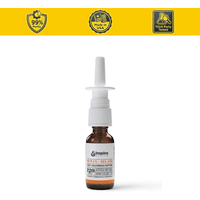
Cognitive Function: In studies of patients with cognitive impairment from cerebrovascular disease, Semax has demonstrated improvements in attention, working memory, and executive function. The effects appear most pronounced in vascular cognitive impairment rather than primary neurodegenerative dementias, consistent with the peptide’s vascular and BDNF-mediated mechanisms.
Optic Nerve Pathology: Semax is approved in Russia for optic nerve atrophy, with clinical reports describing improvements in visual acuity and visual field defects following intranasal courses. The peptide’s BDNF-inducing effects in retinal ganglion cells provide a plausible mechanistic basis, though Western replication studies are lacking.
Stress and Cognitive Performance: Smaller studies in healthy adults have examined Semax effects on cognitive performance under stress, attention, and learning. These investigations consistently report modest improvements in attention metrics and reduced reaction time variability, though the effect sizes are smaller than those seen in pathological states — a pattern typical of nootropic agents that act through neuroplasticity mechanisms rather than direct stimulation.[3]
Safety Profile
Semax has accumulated an unusually favorable safety record across three decades of clinical use. The peptide’s structural relationship to ACTH does not translate into endocrine activity — the (4-10) fragment lacks the residues required for melanocortin receptor binding at physiologically relevant concentrations, and clinical studies have not demonstrated cortisol elevation or HPA axis disruption.
Reported adverse effects are predominantly local: mild nasal irritation or rhinorrhea following intranasal administration. Systemic effects are uncommon and typically limited to transient headache or sleep disturbance at higher doses. No tolerance, dependence, or withdrawal phenomena have been documented, distinguishing Semax from conventional stimulant nootropics.
The peptide is contraindicated during acute psychotic episodes and severe anxiety disorders, where its monoaminergic effects could theoretically exacerbate symptoms. Pediatric use has been studied in Russian pediatric neurology for attention deficit and developmental delay, with reported safety, though Western pediatric data remain absent.
Semax vs Other Cognitive Approaches
Versus Racetams: Piracetam and its analogs (the original synthetic nootropics) work primarily through cholinergic modulation and membrane fluidity effects. Semax operates through fundamentally different mechanisms — BDNF induction and monoaminergic modulation — and produces more robust effects in ischemic and stress-related cognitive impairment. The two classes are not mutually exclusive and are sometimes combined in Russian clinical practice.
Versus Cerebrolysin: Cerebrolysin is a porcine brain-derived peptide mixture with overlapping indications (stroke, cognitive impairment) but a fundamentally different composition — a heterogeneous biological extract rather than a defined synthetic peptide. Semax offers reproducibility and route-of-administration advantages (intranasal versus parenteral) while Cerebrolysin offers a broader spectrum of neurotrophic factor mimicry.
Versus Direct BDNF Strategies: Direct BDNF administration faces insurmountable pharmacokinetic barriers — the protein does not cross the blood-brain barrier and has a plasma half-life measured in minutes. Semax circumvents these limitations by inducing endogenous BDNF expression in target tissues, achieving sustained elevations through transcriptional upregulation rather than exogenous protein delivery.
Versus Conventional Antidepressants: SSRIs and SNRIs eventually upregulate BDNF expression, but only after weeks of receptor-level engagement with serotonergic and noradrenergic systems. Semax produces BDNF elevation within hours through a parallel pathway, making it mechanistically interesting as a potential rapid-acting agent — though comparative clinical trials against established antidepressants have not been performed.
References
- Gusev EI, Skvortsova VI, Miasoedov NF, et al. “Effectiveness of semax in acute period of hemispheric ischemic stroke.” Zhurnal Nevrologii i Psikhiatrii imeni S.S. Korsakova. 2005;105(2):24-28.
- Dolotov OV, Karpenko EA, Inozemtseva LS, et al. “Semax, an analog of adrenocorticotropin (4-10), binds specifically and increases levels of brain-derived neurotrophic factor protein in rat basal forebrain.” Journal of Neurochemistry. 2006;97 Suppl 1:82-86.
- Eremin KO, Kudrin VS, Saransaari P, et al. “Semax, an ACTH(4-10) analogue with nootropic properties, activates dopaminergic and serotoninergic brain systems in rodents.” Neurochemical Research. 2005;30(12):1493-1500.
- Kost NV, Sokolov OY, Gabaeva MV, et al. “Semax and Pro-Gly-Pro activate the leu-enkephalin system of human blood plasma.” Doklady Biological Sciences. 2001;380:436-438.
- Medvedeva EV, Dmitrieva VG, Povarova OV, et al. “The peptide semax affects the expression of genes related to the immune and vascular systems in rat brain focal ischemia: genome-wide transcriptional analysis.” BMC Genomics. 2014;15:228.