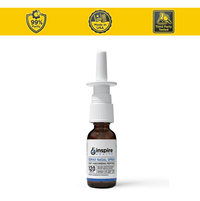
PT-141 — marketed as Vyleesi® (bremelanotide) — holds a unique position in peptide therapeutics: it is FDA-approved (2019) for the treatment of hypoactive sexual desire disorder (HSDD) in premenopausal women. It’s also the only sexual health treatment that works through the central nervous system rather than the vascular system, making it fundamentally different from PDE5 inhibitors like sildenafil (Viagra) or tadalafil (Cialis).
What Is PT-141?
PT-141 (bremelanotide) is a synthetic cyclic heptapeptide that acts as a melanocortin receptor agonist — specifically targeting the melanocortin-4 receptor (MC4R) in the brain. MC4R is located in brain regions involved in sexual arousal, desire, and motivation, including the hypothalamus and limbic system.[1]
PT-141’s development has an unusual origin story. It was derived from Melanotan II, a peptide originally developed for sunless tanning (melanocortin-1 receptor activation). During clinical trials, researchers noticed that Melanotan II unexpectedly induced sexual arousal in study participants — an effect traced to its cross-reactivity with MC4R. PT-141 was then specifically engineered to maximize MC4R selectivity while minimizing pigmentation effects.[2]
How PT-141 Works
Central Mechanism of Action: Unlike PDE5 inhibitors, which work peripherally by relaxing blood vessel smooth muscle to facilitate blood flow, PT-141 acts centrally in the brain. It activates MC4R in the hypothalamus, which triggers downstream dopaminergic signaling pathways associated with sexual desire and arousal. This means it addresses desire (the wanting) rather than just the mechanical response (the ability).[3]
Dopaminergic Pathway: MC4R activation by PT-141 leads to increased dopamine release in brain regions associated with reward and motivation. Dopamine is the primary neurotransmitter of desire — it drives wanting, anticipation, and motivation to pursue pleasurable experiences. By enhancing dopaminergic tone in these circuits, PT-141 addresses the neurochemical basis of low desire.[4]
Clinical Evidence
PT-141’s FDA approval was based on two Phase III randomized, double-blind, placebo-controlled trials (RECONNECT) involving over 1,200 premenopausal women with HSDD. Key findings included statistically significant increases in sexual desire scores compared to placebo, significant increases in satisfying sexual events per month, reduction in distress associated with low sexual desire, and effects observed as early as the first dose with sustained benefits over 24 weeks of treatment.[5]
In men, earlier clinical studies demonstrated that PT-141 induced erections in both healthy volunteers and men with erectile dysfunction, including some who had not responded to sildenafil — suggesting that its central mechanism may be effective when peripheral vascular approaches fail.[6]
Safety Profile
The most common adverse effects in clinical trials were nausea (approximately 40%, typically mild and decreasing with subsequent doses), flushing, headache, and transient injection site reactions. PT-141 can cause a small, transient increase in blood pressure, and it is contraindicated in individuals with uncontrolled hypertension or cardiovascular disease. It also causes transient skin darkening in some patients due to residual MC1R activity.[5]
PT-141 vs. Traditional Approaches
The landscape of sexual health treatments has been dominated by vascular approaches (PDE5 inhibitors for men) and hormonal approaches (testosterone, estrogen). PT-141 occupies a distinct niche because it acts on the brain, not the blood vessels — making it effective for desire-based dysfunction, it works in both men and women (though currently FDA-approved only for women), it does not require continuous daily dosing — it’s used as needed, and it addresses the neurological component of sexual health that hormonal and vascular treatments may miss.
References
- Pfaus JG, et al. “Bremelanotide: an overview of preclinical CNS effects on female sexual function.” Journal of Sexual Medicine. 2007;4(Suppl 4):269-279.
- Hadley ME. “Discovery that a melanocortin regulates sexual functions in male and female humans.” Peptides. 2005;26(10):1687-1689.
- Clayton AH, et al. “Bremelanotide for female sexual dysfunctions in premenopausal women: a randomized, placebo-controlled dose-finding trial.” Women’s Health. 2016;12(3):325-337.
- Molinoff PB, et al. “PT-141: a melanocortin agonist for the treatment of sexual dysfunction.” Annals of the New York Academy of Sciences. 2003;994:96-102.
- Kingsberg SA, et al. “Bremelanotide for the treatment of hypoactive sexual desire disorder: two randomized phase 3 trials.” Obstetrics & Gynecology. 2019;134(5):899-908.
- Diamond LE, et al. “An effect on the subjective sexual response in premenopausal women with sexual arousal disorder by bremelanotide.” Journal of Sexual Medicine. 2006;3(4):628-638.