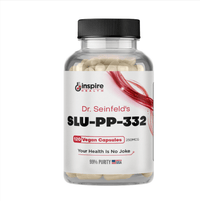
What if a compound could activate the same cellular pathways that exercise triggers — the ones responsible for improved endurance, fat metabolism, and mitochondrial function? That’s the premise behind SLU-PP-332, a compound that’s generating significant interest in the fields of metabolic research and exercise physiology.
What Is SLU-PP-332?
SLU-PP-332 is a small molecule that activates estrogen-related receptor gamma (ERRγ) — a nuclear receptor that plays a central role in regulating genes involved in energy metabolism, mitochondrial function, and oxidative capacity in skeletal muscle. It was developed by researchers at Washington University in St. Louis and the University of Florida.[1]
How ERRγ Activation Works
ERRγ is one of three estrogen-related receptors, and despite the name, it doesn’t bind estrogen or have estrogenic effects. Instead, it’s a transcription factor that regulates the expression of genes involved in mitochondrial biogenesis and oxidative phosphorylation, fatty acid oxidation (fat burning), transition of muscle fibers from fast-twitch (Type II) toward fatigue-resistant slow-twitch (Type I) characteristics, and vascular supply to skeletal muscle.[2]
These are the same adaptations that occur with endurance training — which is why compounds that activate ERRγ are classified as “exercise mimetics.” They simulate, at the gene expression level, the cellular adaptations that exercise produces.
What the Research Shows
In preclinical studies published in 2023, researchers demonstrated that SLU-PP-332 administration in mice produced remarkable metabolic effects. Treated animals showed significantly improved running endurance (running 50% longer and 70% farther than controls), increased oxidative muscle fiber density, enhanced mitochondrial gene expression, and improved fat oxidation with resistance to diet-induced obesity — all without changes in food intake or forced exercise.[1]
The researchers specifically noted that SLU-PP-332 increased the expression of genes typically upregulated by endurance exercise, suggesting it activates a genuinely exercise-like transcriptional program in skeletal muscle.
Who Is This For?
SLU-PP-332 is not a replacement for exercise — nothing is. But it’s particularly interesting for individuals looking to amplify the metabolic benefits of their existing exercise program, people with conditions that limit exercise capacity, those looking to support metabolic health during periods of reduced activity, and individuals focused on body composition and metabolic flexibility.
References
- Kim SH, et al. “ERRγ agonist SLU-PP-332 promotes exercise-like effects in mice.” Research presented at American Chemical Society Spring Meeting. 2023.
- Rangwala SM, et al. “Estrogen-related receptor gamma is a key regulator of muscle mitochondrial activity and oxidative capacity.” Journal of Biological Chemistry. 2010;285(29):22619-22629.