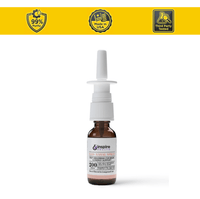
BPC-157 is arguably the most researched tissue-repair peptide in existence. With over 100 published studies demonstrating its effects on muscle, tendon, ligament, bone, and gastrointestinal tissue repair, it has earned a reputation as the “wolverine peptide” in biohacking circles. But there’s an ongoing debate: do you need to inject it, or can oral capsules deliver meaningful results?
The answer depends on what you’re trying to accomplish.
BPC-157: A Quick Refresher
BPC-157 (Body Protection Compound-157) is a 15-amino-acid peptide originally isolated from human gastric juice. It’s a fragment of a larger protein called BPC that plays a role in protecting and repairing the gastrointestinal tract. Since its discovery, researchers have documented BPC-157’s effects on tissue repair across virtually every tissue type studied.[1]
The Case for Oral BPC-157
Here’s what most people don’t realize: BPC-157 was discovered in the GI tract. It’s a gastric peptide — the gut is its native environment. This gives oral BPC-157 a unique advantage that most other peptides don’t have.
Gastric Stability: Unlike most peptides that are rapidly degraded by stomach acid and digestive enzymes, BPC-157 has demonstrated remarkable stability in the gastric environment. This makes biological sense — a peptide whose natural function is protecting the stomach lining would need to survive in that environment to do its job.[2]
Gut-Specific Effects: For gut-related applications — IBS, leaky gut, NSAID-induced damage, inflammatory bowel conditions, gastric ulcers — oral administration delivers BPC-157 directly to the tissue it naturally protects. Research has shown that oral BPC-157 heals gastric and intestinal lesions, protects against NSAID-induced gut damage, and supports intestinal barrier integrity.[1]
Systemic Distribution: Research indicates that orally administered BPC-157 does reach systemic circulation and can exert effects beyond the GI tract. Animal studies have demonstrated that oral BPC-157 accelerated healing of skin wounds, muscle injuries, and even bone fractures — suggesting meaningful systemic bioavailability.[3]
When Injections Make More Sense
For targeted, localized repair — a specific tendon injury, joint issue, or surgical site — injecting BPC-157 subcutaneously near the injury site delivers a higher local concentration more quickly. This is the approach most commonly used in clinical and research settings for musculoskeletal applications.
The Practical Decision
For gut health, GI repair, and general systemic support, oral BPC-157 capsules offer a practical, needle-free approach with strong research support. For localized injury repair, injections deliver more targeted results. Many practitioners recommend a combined approach — oral for systemic and gut benefits, with injectable protocols for specific injuries when needed.
References
- Sikiric P, et al. “Stable gastric pentadecapeptide BPC 157: novel therapy in gastrointestinal tract.” Current Pharmaceutical Design. 2011;17(16):1612-1632.
- Sikiric P, et al. “Stable gastric pentadecapeptide BPC 157 in trials for inflammatory bowel disease.” Inflammatory Bowel Diseases. 2006;12(Suppl 1):S19-S20.
- Seiwerth S, et al. “BPC 157 and standard angiogenic growth factors: gastrointestinal tract healing, lesson from tendon, ligament, muscle and bone healing.” Current Pharmaceutical Design. 2018;24(18):1972-1989.